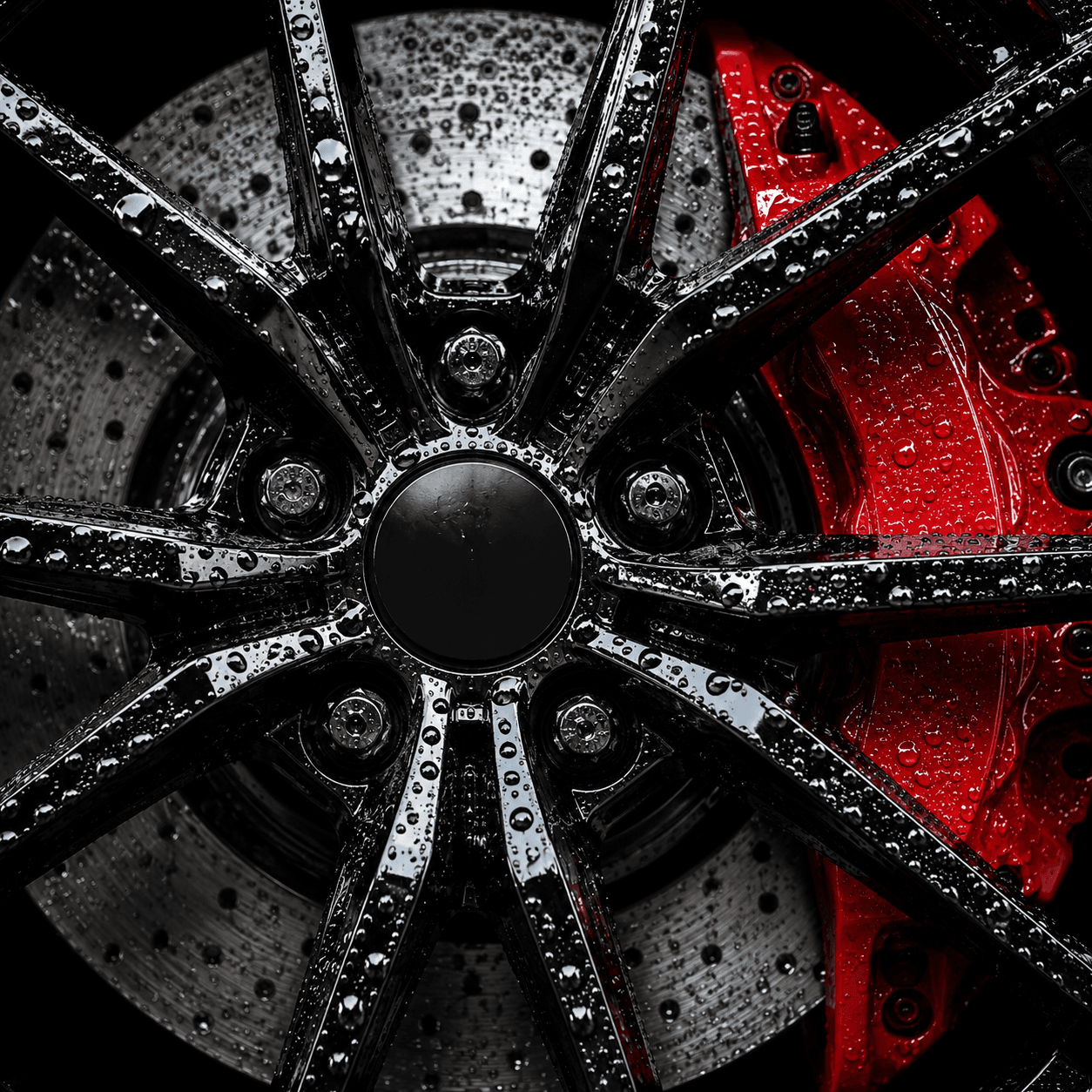
Wheel Armour
The Ultimate Defence for Automotive Wheels
Specifically engineered to withstand extreme temperatures (up to 600°C) and abrasive brake dust. Utilizing advanced Japanese Borophene technology, it chemically bonds to create a slick sacrificial layer that keeps wheels cleaner for longer.
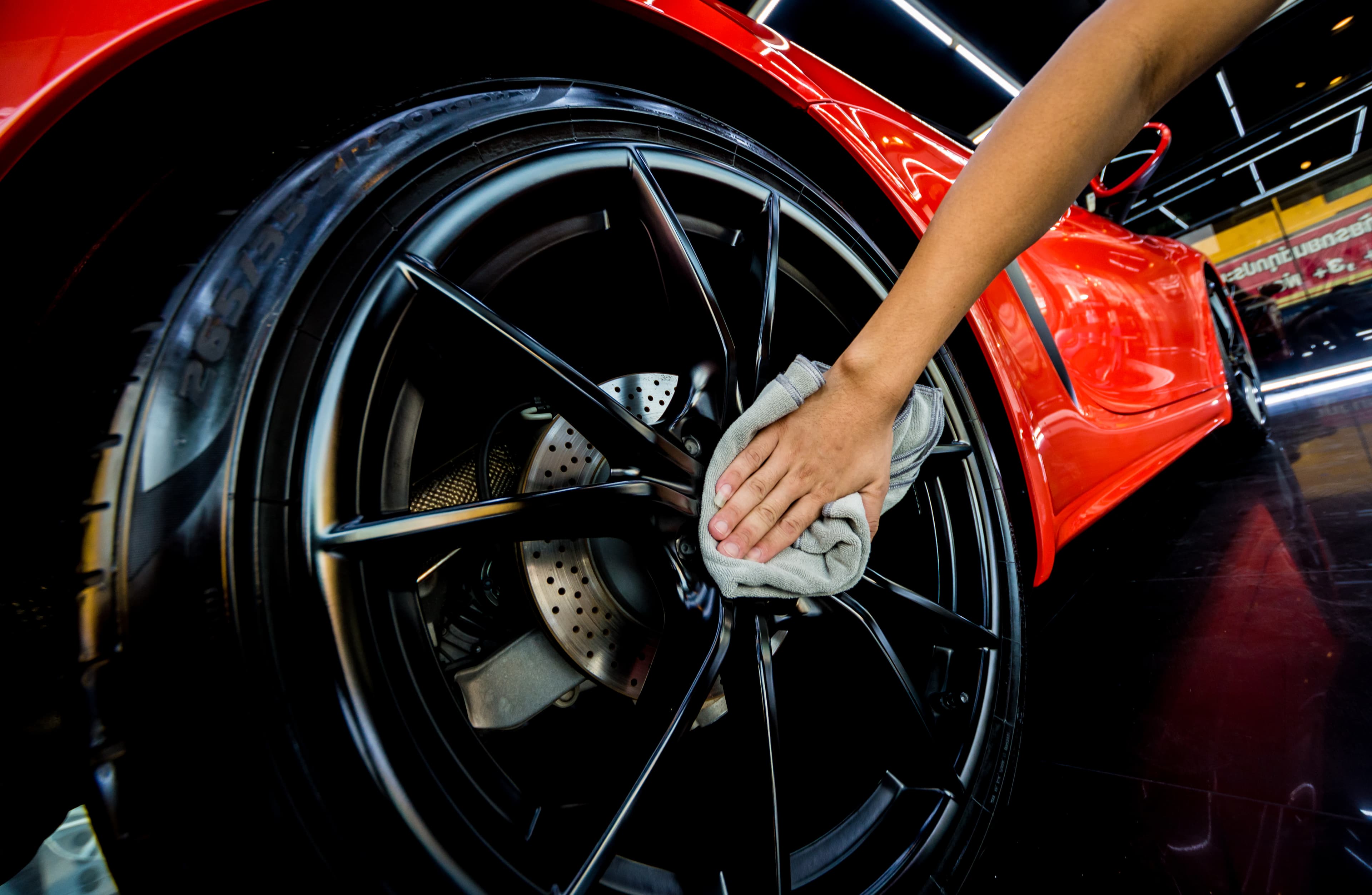
Performance Demonstration
Observe the Japanese Pointed Borophene™ application. Built to withstand heat up to 600°C, the Japanese Pointed Borophene™ formula prevents corrosive iron and tar from bonding.
Key Protection Benefits
- Advanced Japanese Pointed Borophene™ wheel formula
- Significant reduction in brake dust and road grime adhesion
- Withstands extreme braking temperatures (up to 600°C)
- Excellent self-cleaning properties and hydrophobic run-off
- Sacrificial barrier defends against tar, salt, iron, and oxidisation
The Coating Process
- 1Decontamination wash and iron chemical bath to lift embedded metallic particles
- 2Clay decontamination and polishing of outer faces
- 3Degreasing prep wipe down to ensure clean surface interface
- 4Detailed brush and hand-application of Wheel Armor coating
- 5Curing check under inspection lamps before installation/delivery
Disclaimer & Wear
While ArmourOne Ceramic Pointed Borophene™ Wheel Armour provides defense-grade protection against brake dust, tar, bitumen, and salt exposure, please note that wheel protection does not warrant against mechanical scratches, stone chips, road rash, oxidisation, or general wear and tear.
Frequently Asked Questions
Does this warranty cover physical scratches?
No, ArmourOne Wheel Armour is engineered to resist brake dust, tar, bitumen, and environmental fallout, but it does not warrant against oxidisation, scratches, stone chips, or general wear and tear.
Do I need wheel cleaners after coating?
Usually no. A pressure washer and standard car wash soap are sufficient to clean coated wheels, saving you from using harsh, smelly wheel cleaners.
Care & Maintenance
- Wash with standard car wash soap and a dedicated wheel mitt.
- Avoid acidic wheel cleaners as they are unnecessary and can shorten the coating lifespan.